The electric eel.
Sensing what sight cannot reveal.
Electrophorus
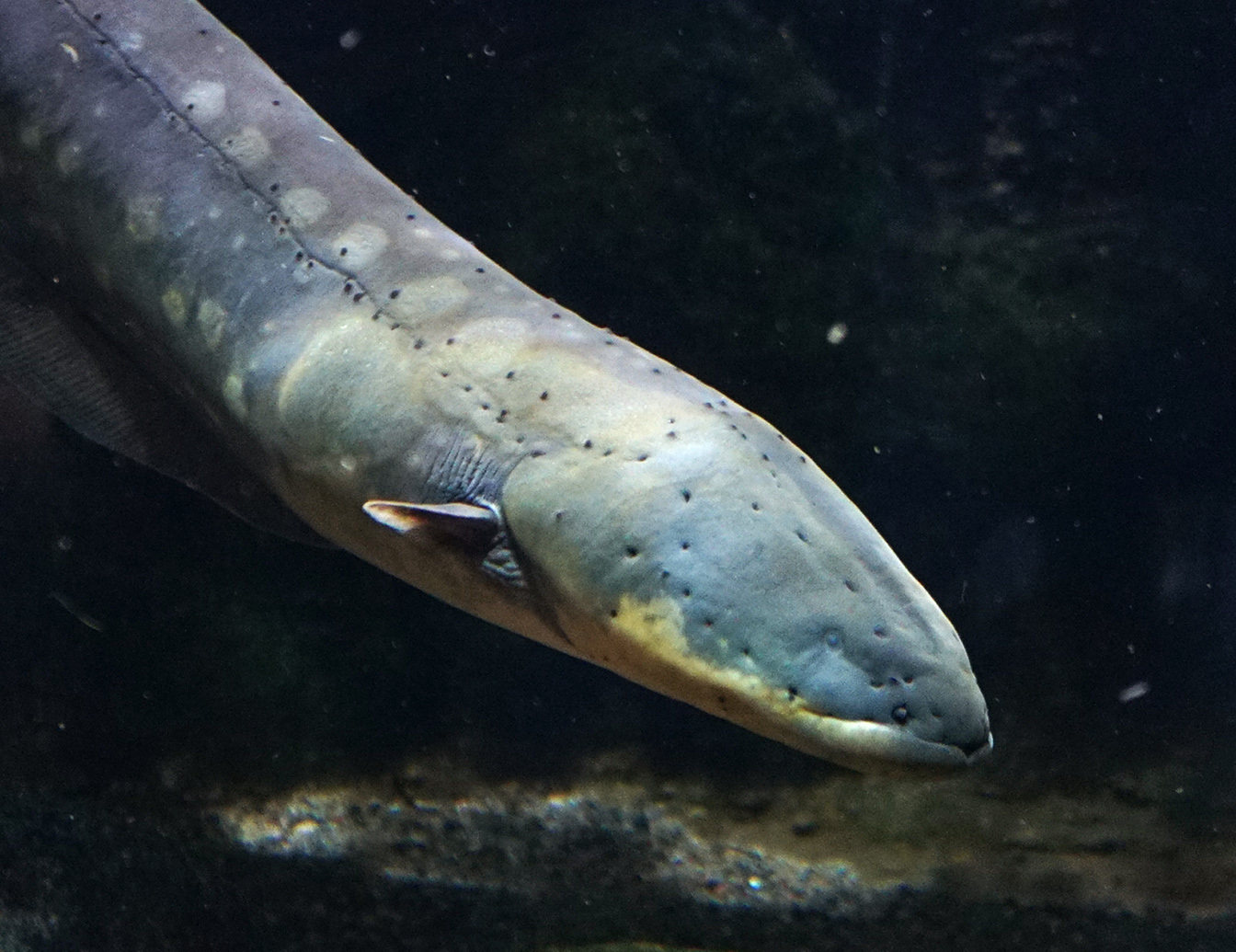
Sensing what sight cannot reveal
Electric eels live in the fresh waters of South America, including the Amazon and Orinoco river systems. Their world can be slow-moving and murky. With poor eyesight, they rely on electrical sensing to navigate when the view ahead is unclear. [1]
Making the unseen detectable
Weak electrical impulses help electric eels navigate, find prey and communicate. This ability, called electrolocation, lets them gather information about their surroundings when light and visibility offer little help. Their electricity is a way of sensing their world as well as a source of powerful shocks. [1]
From a faint signal to a meal
Electric eels also detect movement through a pressure-sensitive lateral line. When prey is nearby, rapid electric pulses can make it twitch, revealing its presence. Stronger pulses then help the eel immobilize its meal. [2]
An eel in name
Despite their familiar name, electric eels belong to the knifefish group rather than the true eels. Their most remarkable feature is the combination of sensing, communication and hunting made possible by electricity. [1]